The Third Intelligence Masterclass: June 2026

Masterclass Playback · Third Intelligence
By Sarah Pirie-Nally · Published 17 June 2026 · 12 min read
Agentic AI, token mechanics, conscious scaling, and the co-creation philosophy. Here's everything we covered.
Watch the Full Recording
What Is the Third Intelligence?
The Third Intelligence is the emergent capability that arises when human intelligence and artificial intelligence work in genuine, intentional collaboration. It's not about AI replacing humans. It's not about humans resisting AI. It's the space between, where something greater than the sum of its parts begins to emerge.
TI = HI + AI
This session explored what that means in practice, from the infrastructure layer all the way up to how you, as a leader, can work alongside AI with intention, clarity, and confidence.
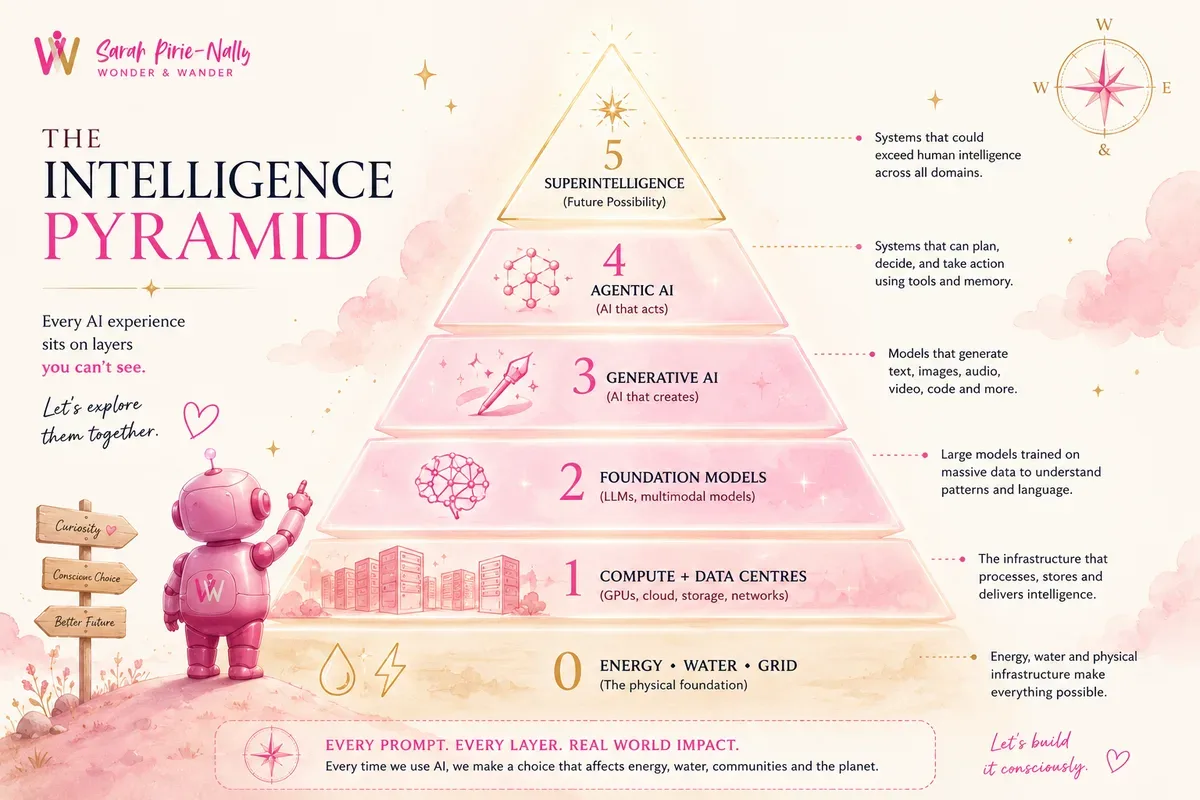
The Intelligence Pyramid
We started with the foundational layers that make AI possible:
- Physical Infrastructure, Energy, water, electrical grids, and data centres. This is the base layer most people never think about, but it determines everything above it.
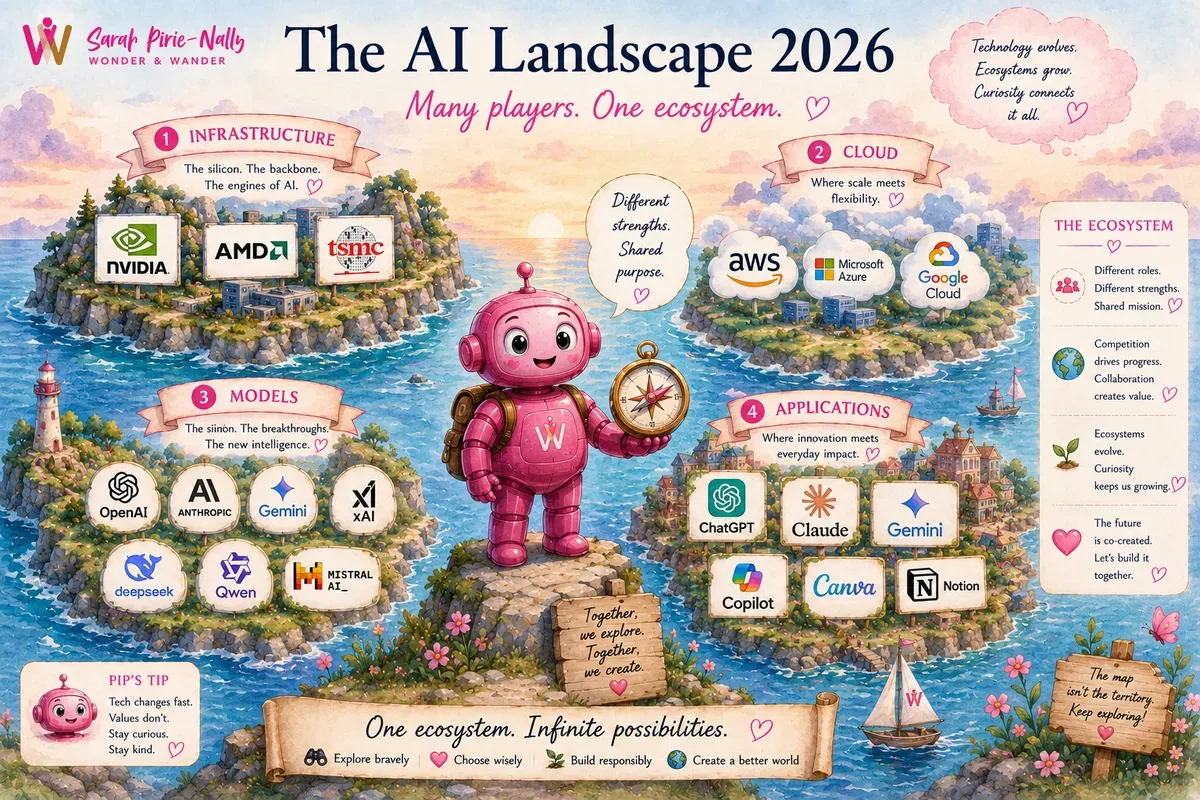
- Hardware & Chips, Nvidia, AMD, and the silicon that powers computation.
- Foundation Models, The large language models (ChatGPT, Claude, Gemini) trained on massive datasets.
- Applications & Agents, The tools we interact with daily, from chat interfaces to fully autonomous agents.
Understanding this stack matters because it shapes how you think about cost, ethics, sustainability, and where your data actually goes.
Defining Agentic AI
A key distinction we explored: Agentic AI is not the same as a chatbot.
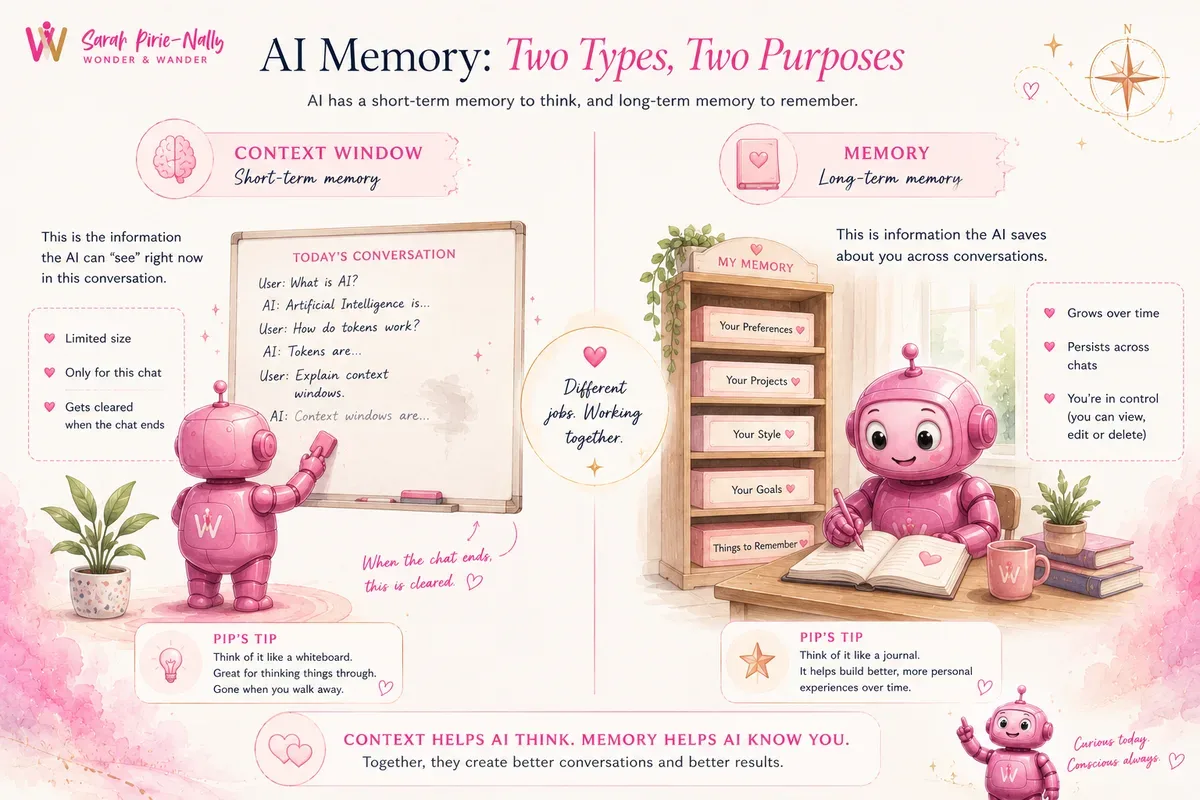
Standard chat interfaces (like free ChatGPT) are reactive, you ask, they respond, and they often "forget" between sessions. Agentic AI is different:
- It can be programmed with specific instructions and rules
- It takes actions on your behalf
- It maintains state and memory across interactions
- It uses larger context windows and long-term memory
Think of it this way: a chatbot is like texting a knowledgeable friend. An agent is like hiring a capable assistant who remembers your preferences, follows your processes, and can execute tasks independently.
"Agent traffic on the web has recently surpassed human traffic.", This is the world we're already living in.
Token Mechanics: How AI Actually Thinks
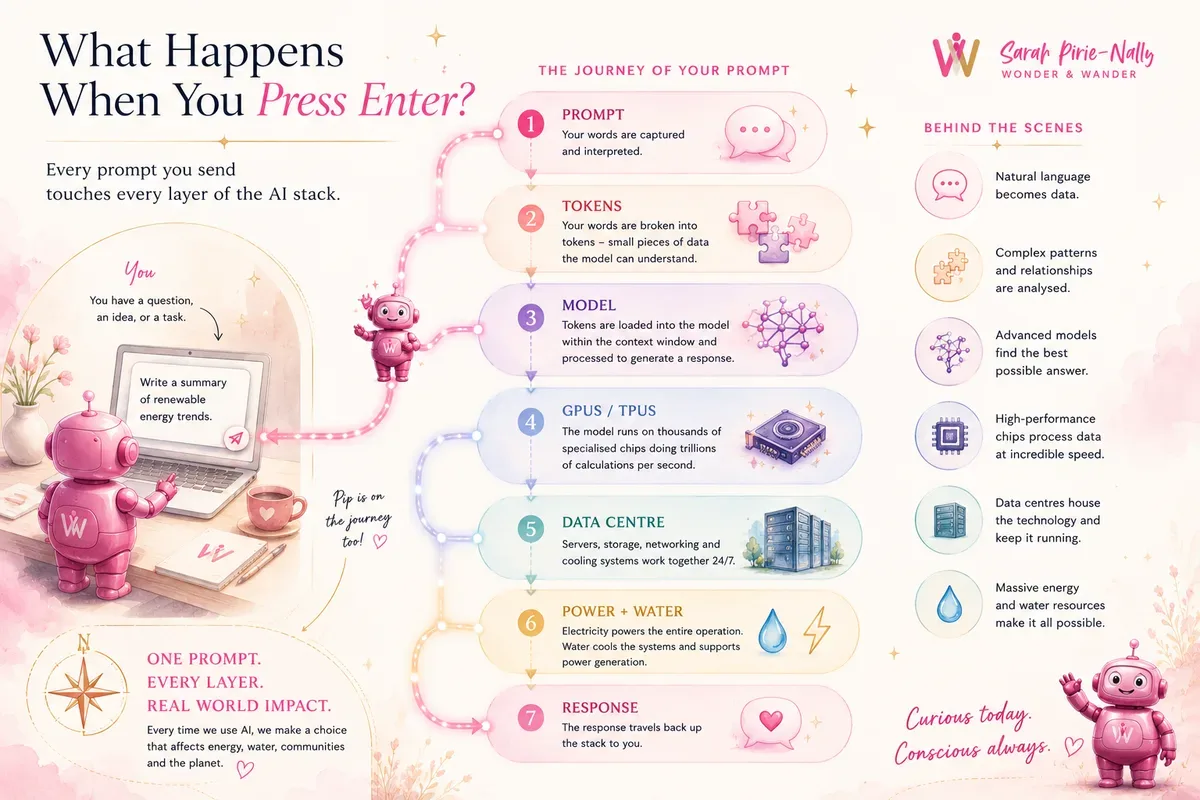
One of the most practical sections of the session covered how AI processes information:
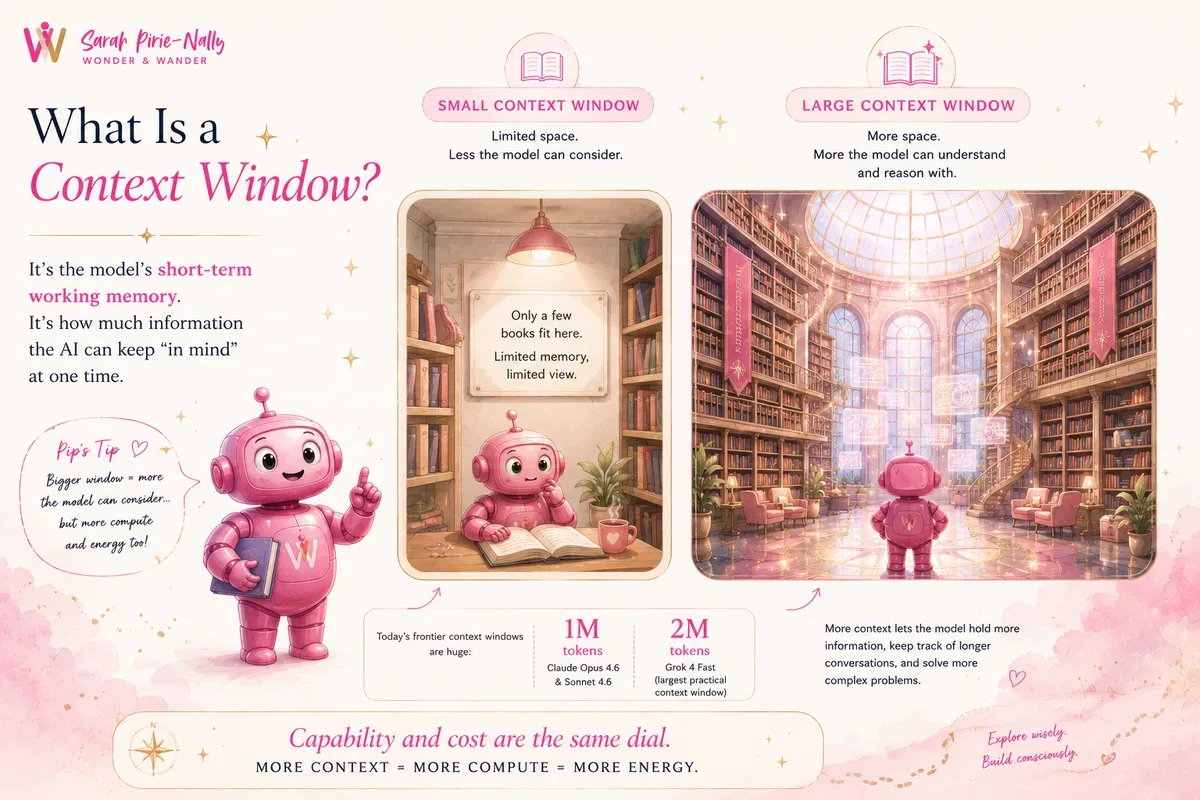
- Your inputs are broken down into tokens (roughly 4 characters each)
- Tokens are processed as vectors within "neighbourhoods" or schemas
- AI functions as a predictive tool, analysing context to determine the next most likely response
- This is why clear, structured prompting matters so much
The F1 Car Analogy: Sarah compared using high-power AI models to driving an F1 car. You wouldn't take an F1 car to the shops. Similarly, you should reserve your most powerful (and expensive) AI tools for high-impact tasks, not routine queries.
Conscious Scaling and Resource Management
Scaling AI isn't just about adding more tools. It requires:
- Intentional resource management, understanding what each tool costs and when to use it
- Robust documentation, your AI agents can only be as good as the knowledge base you give them
- Balancing automation with oversight, too much agency without guardrails creates real financial risk
Sarah shared that she currently spends approximately $1,500 per month on AI usage, and recounted an incident where an agent accidentally attempted to bill $22,000. The lesson: always maintain human oversight on financial decisions.
Choosing the Right Model for the Task
| Task Type | Recommended Tool | Why |
|---|---|---|
| Deep research | Perplexity | Academic-quality citations, real-time web access |
| Creative writing | Claude | Nuanced, values-aligned, strong reasoning |
| Production work | Manus | Full agentic capability, persistent memory |
| Quick queries | ChatGPT | Fast, accessible, good for brainstorming |
The Second Brain: Your Foundation for AI Success
AI agents perform best when you provide a solid foundation. Sarah recommends building a "second brain" using platforms like Notion:
- Clarify your projects before handing them to an agent
- Document your processes, standard operating procedures become the rules your agents follow
- Store key outputs, don't rely solely on AI to retain information
- Build intellectual property, treat AI usage like a field journal, manually capturing insights
"An agent cannot repair broken logic if the underlying rules and processes are not well-documented."
The Risks of Over-Reliance
We discussed the concept of "brain rot", the cognitive atrophy that comes from outsourcing too much thinking to AI. The antidote:
- Write things down, capture insights in your own words
- Design prompts carefully, be intentional about what you ask
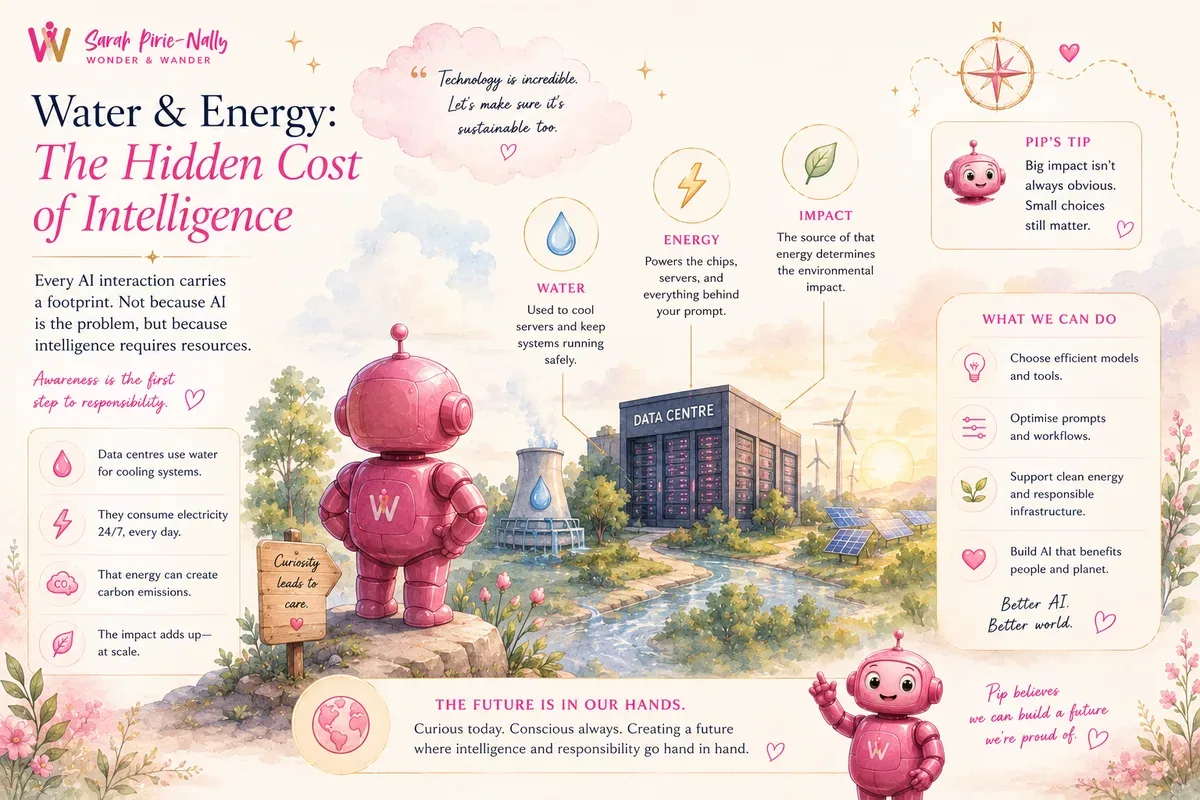
- Maintain awareness of environmental costs (energy, water consumption of data centres)
- Remember what AI cannot capture, lived emotion, grief, indigenous wisdom passed down orally, embodied experience

Participants connecting and sharing insights between sessions
Preparing for Regulation
Future AI regulation is coming. Sarah recommends preparing now by:
- Tracking all active AI tools, use the AI framework to map exactly which systems you're using for which tasks
- Documenting your AI decisions, why you chose specific tools, what data they access, how they're governed
- Building strong intellectual property through manual knowledge retention
Investing a small amount of effort now saves extensive remediation work in 6-12 months.
The Co-Creation Philosophy
Perhaps the most powerful insight from the session: AI presents an opportunity for individuals to work together to build a future they are proud of, rather than having technology forced upon them.
This means:
- Spending more time formulating the right questions than rushing to solve problems
- Determining which tasks to pursue based on your unique strengths
- Approaching AI as a creative partner, not just a productivity tool
- Influencing the development of AI by using it responsibly and consciously
LUMINA Prompting: Conscious and Self-Located Design
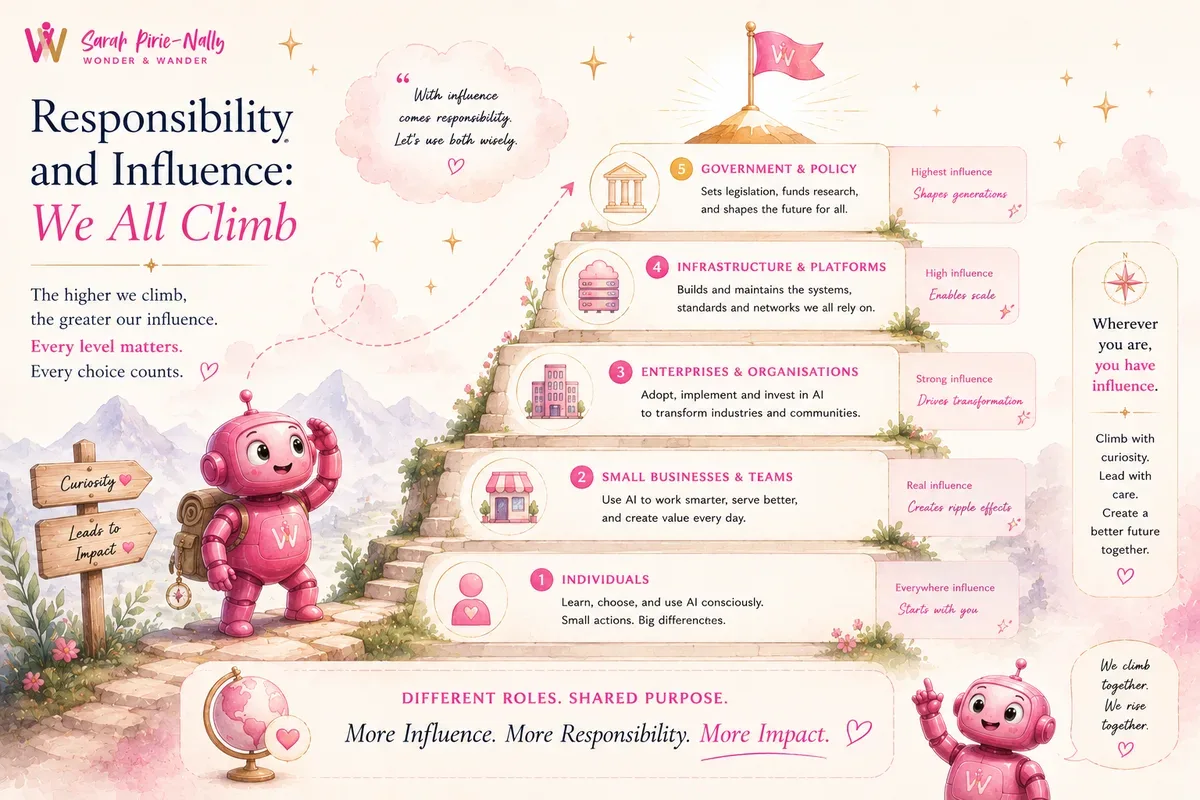
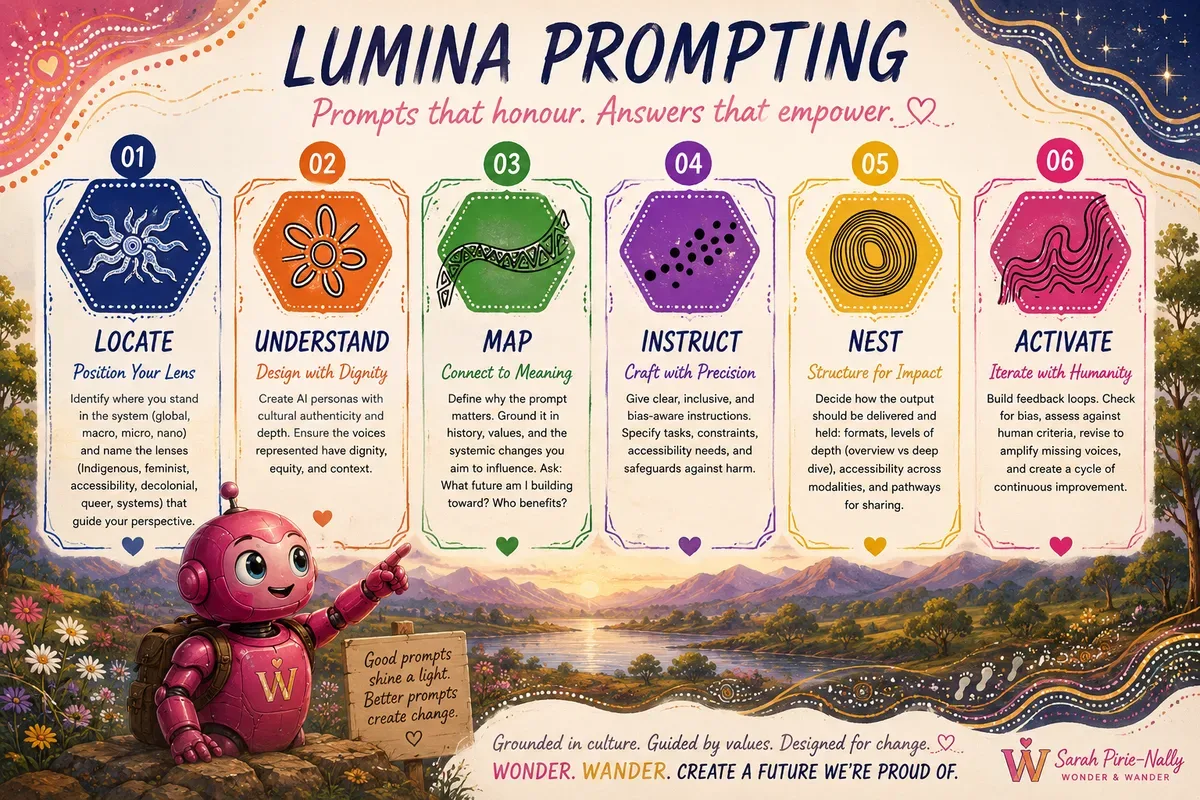
One of the most powerful frameworks introduced in this masterclass is LUMINA Prompting, a six-step methodology for crafting prompts that honour culture, amplify diverse voices, and create meaningful change through AI.
LUMINA stands for:
-
L, Locate (Position Your Lens): Identify where you stand in the system and name the lenses that guide your perspective, whether Indigenous, feminist, accessibility-focused, decolonial, queer, or systems-oriented.
-
U, Understand (Design with Dignity): Create AI personas with cultural authenticity and depth. Ensure the voices represented have dignity, equity, and context.
-
M, Map (Connect to Meaning): Define why the prompt matters. Ground it in history, values, and the systemic changes you aim to influence. Ask: What future am I building toward? Who benefits?
-
I, Instruct (Craft with Precision): Give clear, inclusive, and bias-aware instructions. Specify tasks, constraints, accessibility needs, and safeguards against harm.
-
N, Nest (Structure for Impact): Decide how the output should be delivered and held, formats, levels of depth, accessibility across modalities, and pathways for sharing.
-
A, Activate (Iterate with Humanity): Build feedback loops. Check for bias, assess against human criteria, revise to amplify missing voices, and create a cycle of continuous improvement.
"Good prompts shine a light. Better prompts create change.", Grounded in culture. Guided by values. Designed for change.
LUMINA is not just a prompting technique, it is a philosophy of conscious AI interaction. It asks us to consider not only what we want from AI, but who benefits, whose voices are centred, and what future we are building with every interaction.

Co-creation in action: mapping AI strategy together
Your Next Steps
Based on the session, here are the actions we recommend:
- Explore research-focused AI tools, Try Perplexity or Claude for your next deep research task
- Implement your Second Brain, Set up a Notion workspace to clarify your projects and processes
- Create AI Skills, Build specific skills for recurring tasks to reduce token usage and redundant effort
- Map your AI ecosystem, Use the AI tool to track which tools you're using and why
- Practice LUMINA Prompting, Apply the six-step framework to your next important prompt
- Take the Wonder Audit, Assess your current AI potential and receive personalised next steps
Ready to Go Deeper?
Find your next step with Sarah.
Made by Sarah Pirie-Nally and Manus AI